Community

Connection is built into the way our school works.

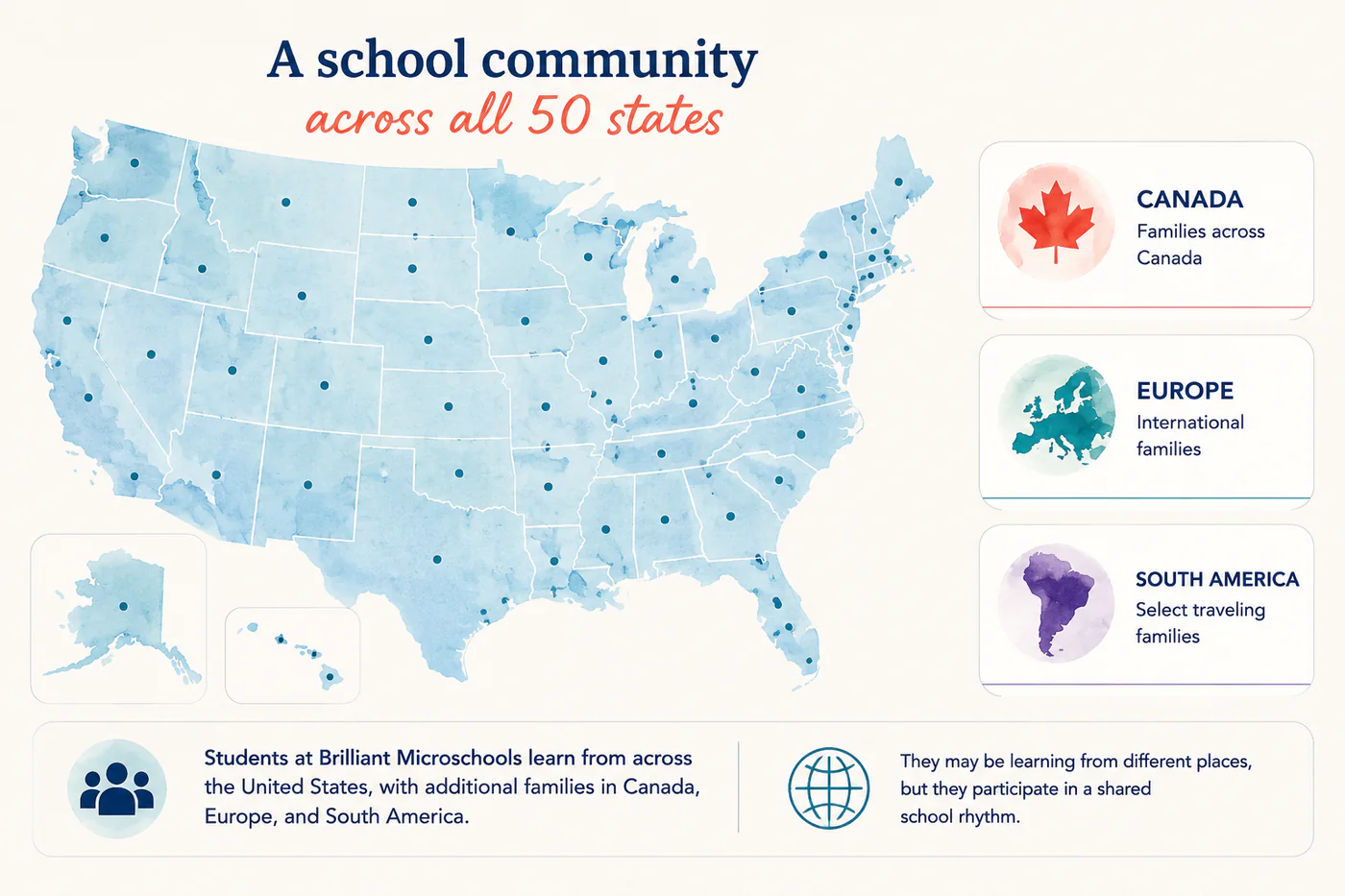
Brilliant Microschools serves K–12 students across all 50 states, with families also joining from Canada, Europe, and South America.

Our school is online, so we design connection deliberately.

Students need familiar faces, shared rituals, low-pressure ways to meet classmates, and real-world moments when possible. That is why community is part of the operating model at Brilliant Microschools.

Illustrated map showing Brilliant Microschools students across all 50 states, with families also in Canada, Europe, and South America.

Community by design

A strong online school has to solve for connection.

That is especially true for students who learn differently. Some students want friendship, but find traditional social settings overwhelming. Some need structure before they feel comfortable joining in. Some do better when connection builds gradually.

So we create several layers of community.

01

Electives and clubs

02

Schoolwide online events

03

Weekly Thursday meetups

04

Regional field trips

05

Houses led by school leaders

06

Clear family communication

Each layer gives students another way to feel known.

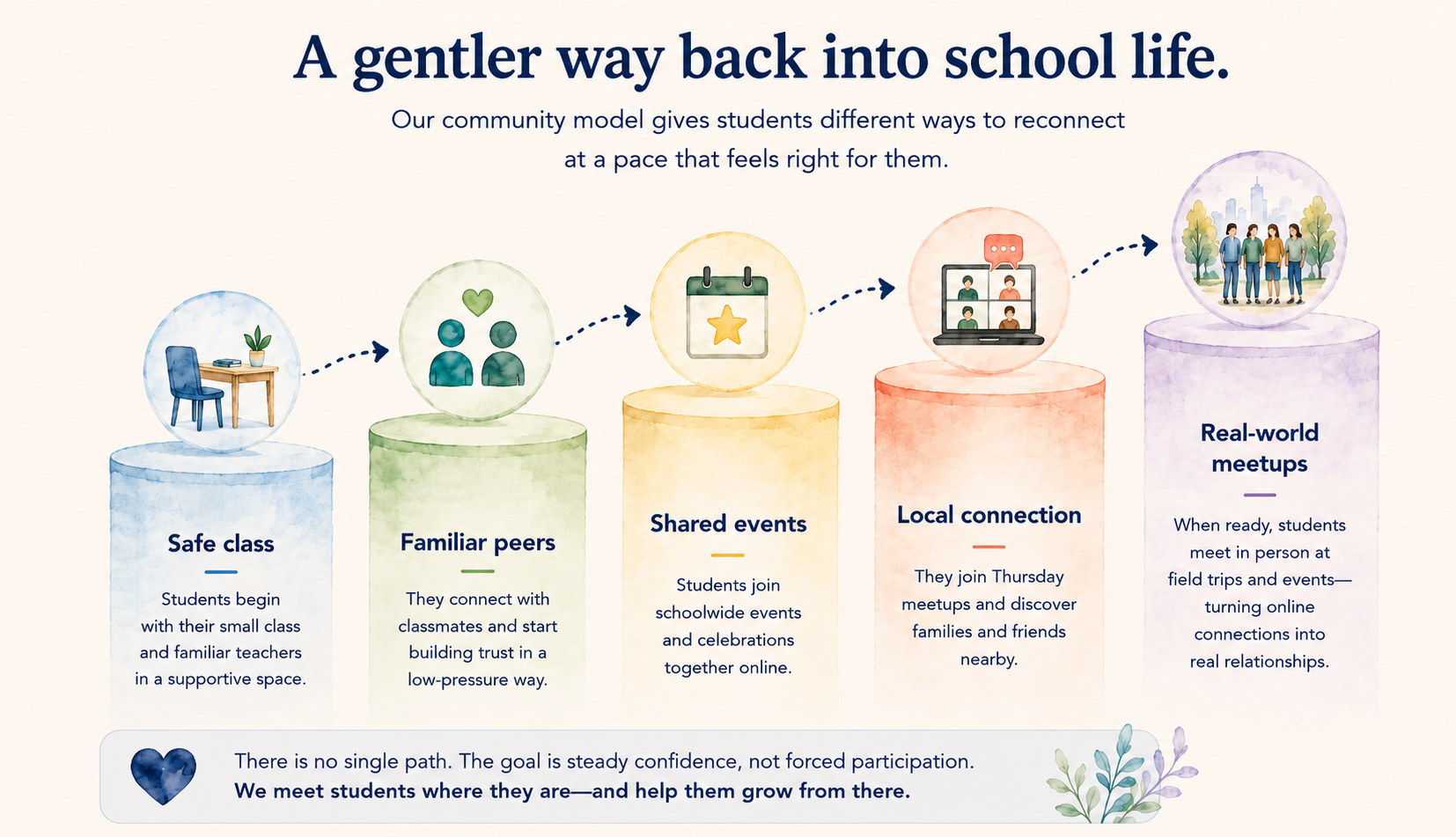
Infographic showing a gradual path from a safe class to familiar peers, shared events, local connection, and real-world meetups.

Social confidence

Many students come to Brilliant Microschools after school has become stressful, lonely, or overwhelming.

Some have dealt with anxiety. Some have been bullied. Some have felt rejected by traditional classrooms. Some want friends, but need a calmer way to build trust again.

Our community model gives students different ways to reconnect.

A student may begin with a small class. Then join a House assembly. Then attend a schoolwide event. Then try a Thursday meetup. Then, when ready, meet other families in person at a field trip.

There is no single path. The goal is steady confidence, not forced participation.

Teachers and school leaders pay attention to this growth. Engagement, communication, confidence, and social-emotional development matter alongside academic progress.

Six ways connection is built into the school year.

Connection is not left to chance. It is built through repeated rhythms, shared traditions, smaller groups, family communication, and real opportunities to meet.

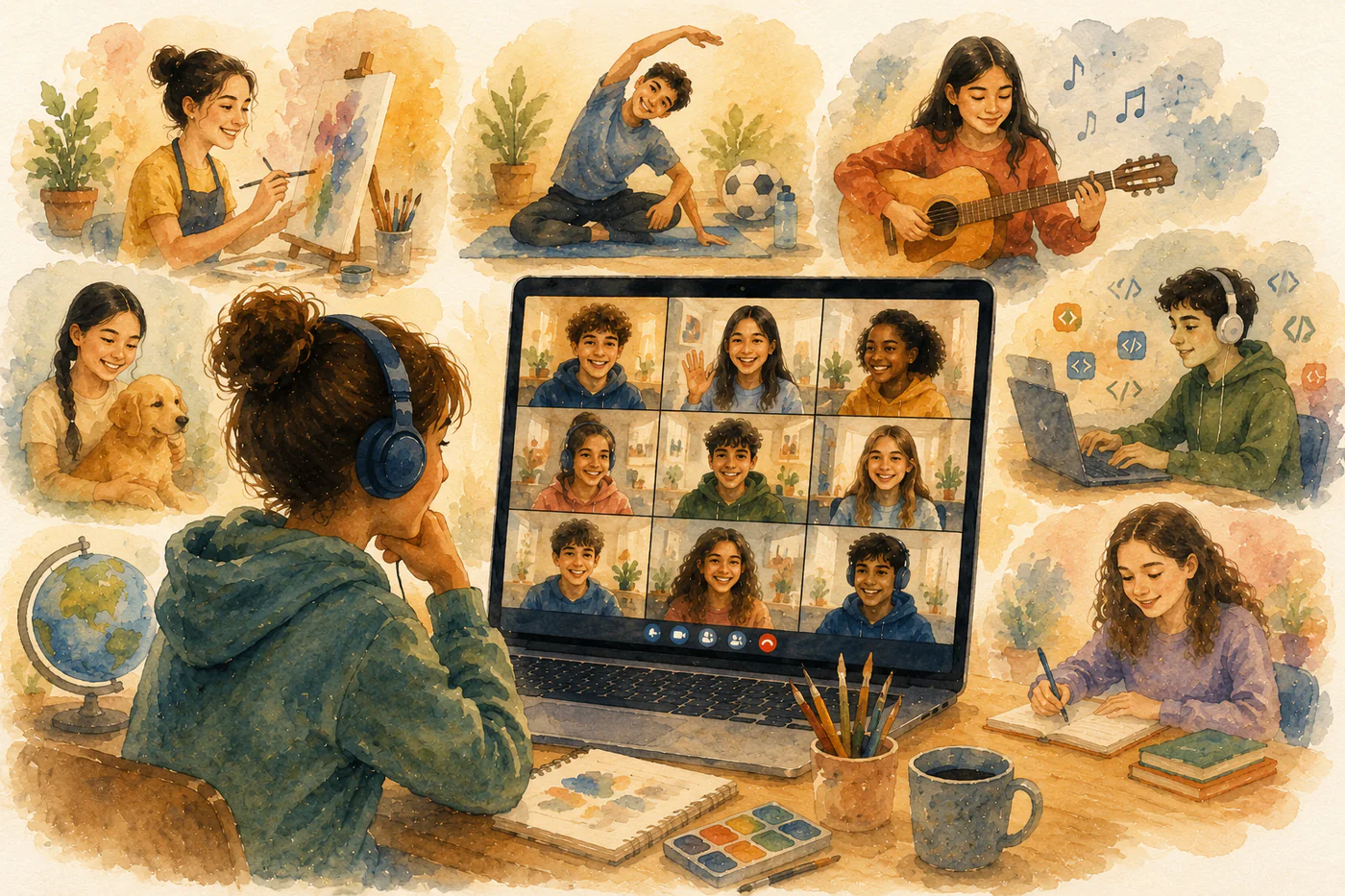
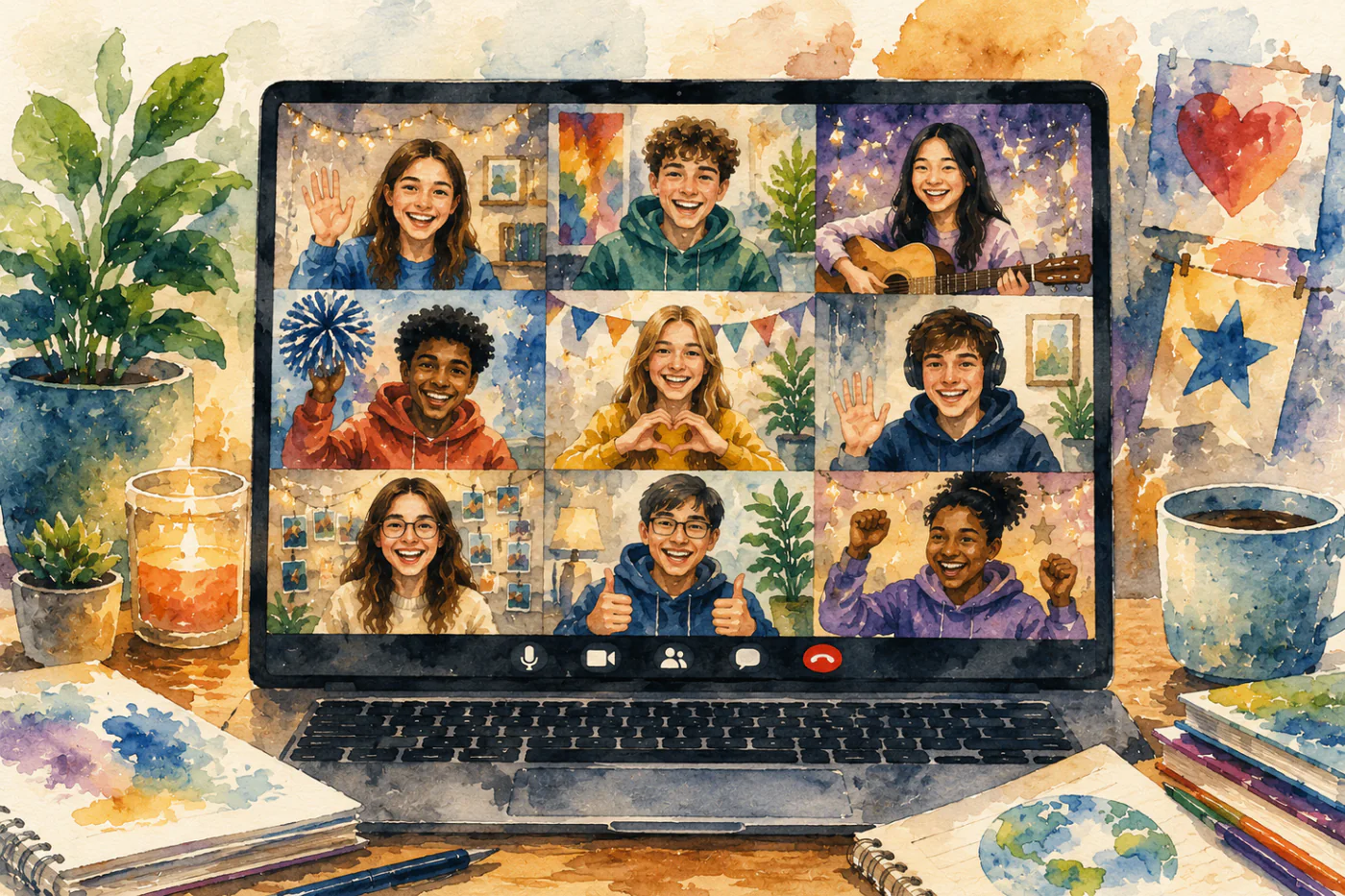
Watercolor illustration of a cozy desk with a laptop showing smiling students in an online session, surrounded by art supplies, a globe, music notes, a soccer ball, books, yarn, and a small pet — hints of different electives and clubs.

Electives and clubs help students connect through shared interests.

Electives and clubs give students another way to connect beyond their main academic classes. Students can explore interests such as Spanish, Health & PE, Digital Art, Coding, art, pets, trivia, anime, creative writing, music, arts and crafts, and relaxed social spaces like The Chill Zone.

For many students, a shared interest is the easiest bridge. It gives them something natural to talk about and a lower-pressure way to feel part of the wider school.

Watercolor illustration of middle and high school students joining an online schoolwide event.

Schoolwide traditions that make the year feel alive.

A school year needs shared moments. Our students participate in online events such as pep rallies, talent shows, cooking events, homecoming, Spirit Week, Career Week, Science Fair, graduations, buddy events, and student-led activities.

These events give students something to look forward to beyond regular classes. They create common memories, school traditions, and natural reasons for students to show up, cheer each other on, and feel part of something larger.

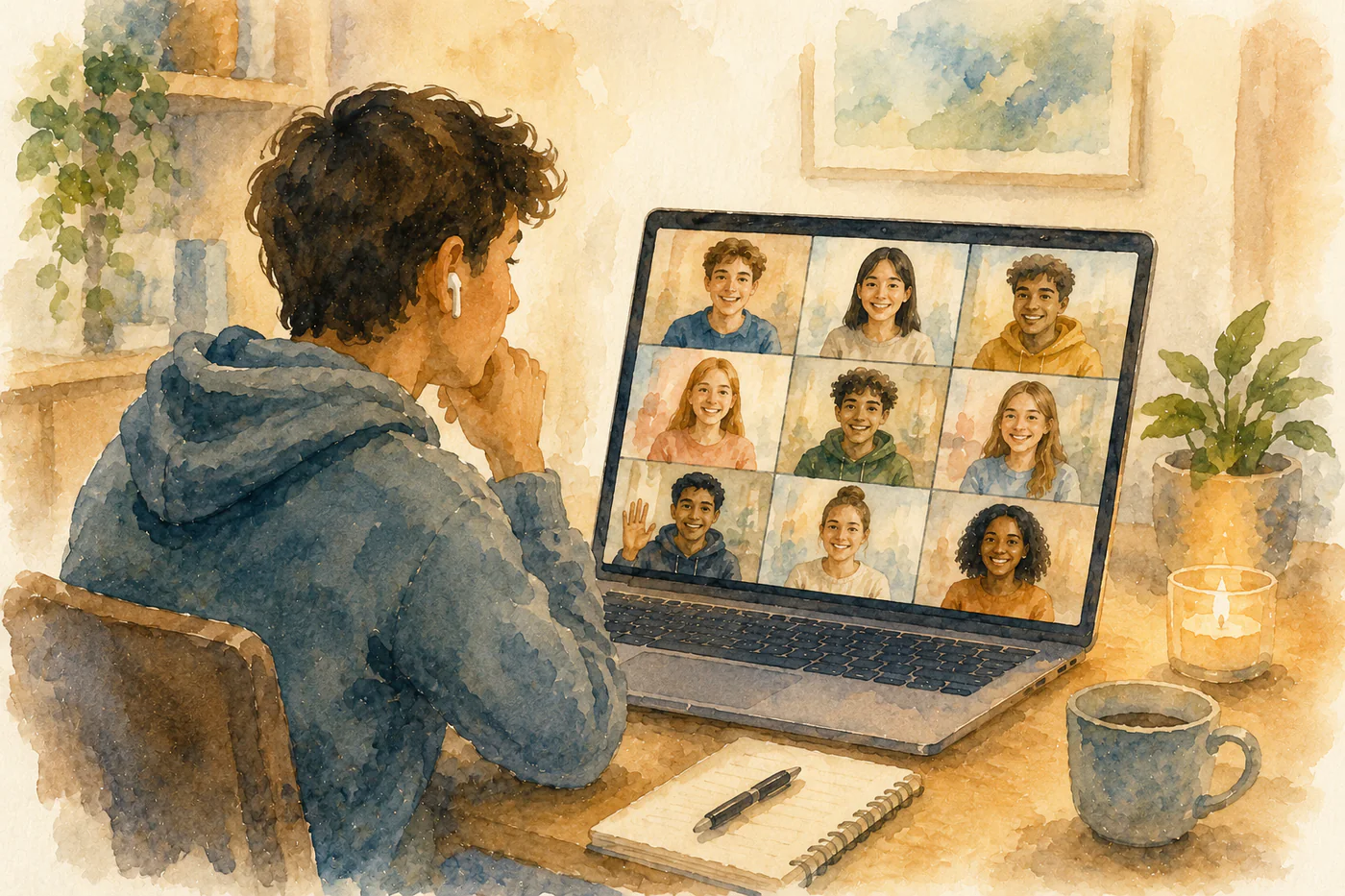
Watercolor illustration of a student joining a small weekly Zoom meetup from home.

Weekly meetups create a steady rhythm of connection.

Every Thursday, students and families can join Zoom meetups that give community a regular place in the school week.

Some meetups are built around shared interests, such as anime, art, pets, trivia, creative writing, music, and arts and crafts. Others are local or regional, helping families in the same area find one another before a field trip or in-person gathering.

The mix is intentional. Themed meetups make conversation easier. Local meetups help families discover who else is nearby, ask practical questions, and arrive at future gatherings with a few familiar faces already in mind.

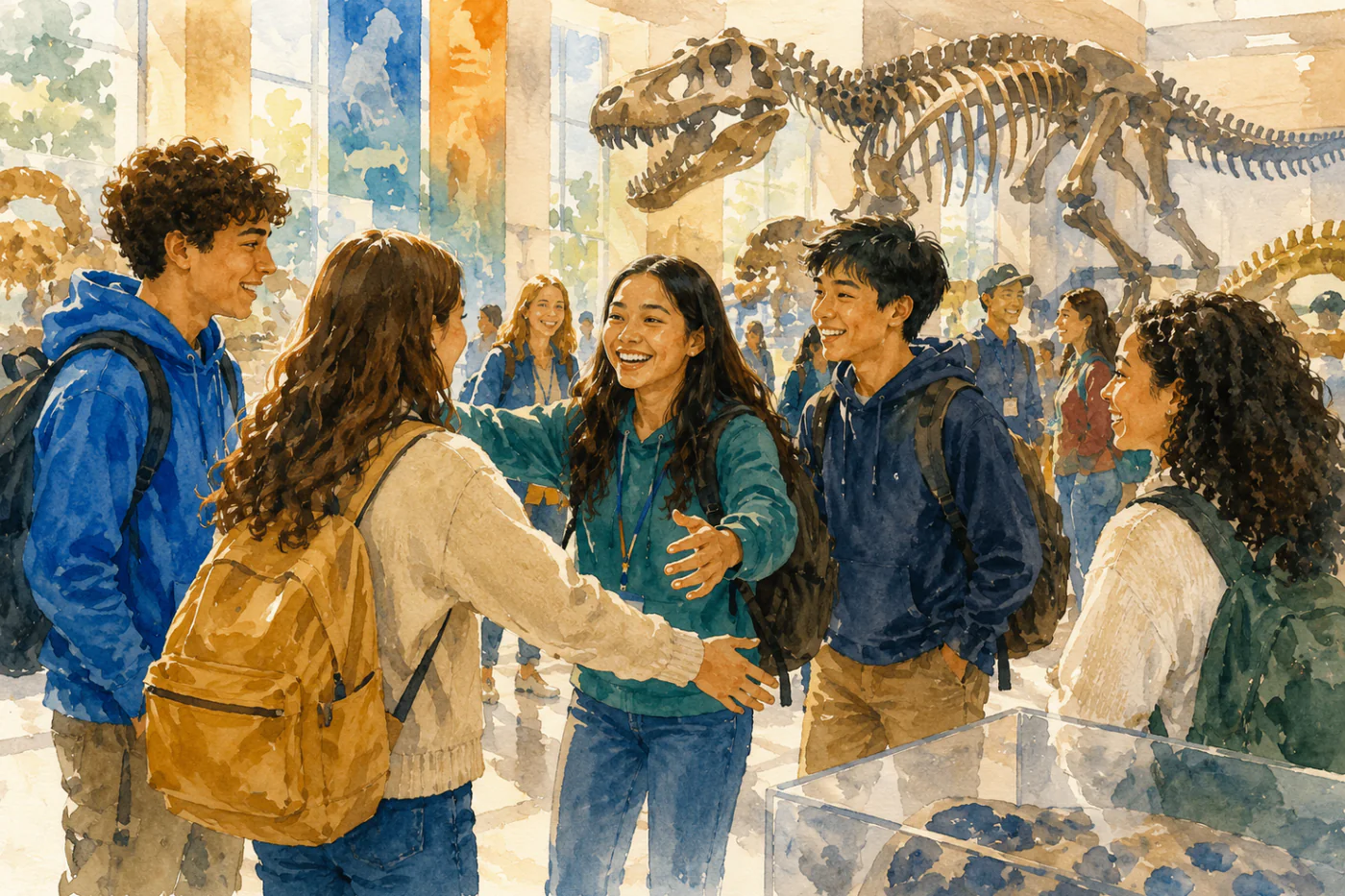
Watercolor illustration of middle and high school students meeting in person during a museum field trip.

Field trips turn online recognition into real-world connection.

Brilliant Microschools organizes regional field trips where local families can meet in person. When appropriate, students from other states may travel in. Some events bring together 50–100 attendees once local and traveling families are included.

Before many field trips, we host a short Zoom meetup a few days ahead of time. Parents can see who is coming. Students can recognize a few faces. Families can understand the age mix and ask practical questions.

That makes the in-person event feel calmer, warmer, and more familiar.

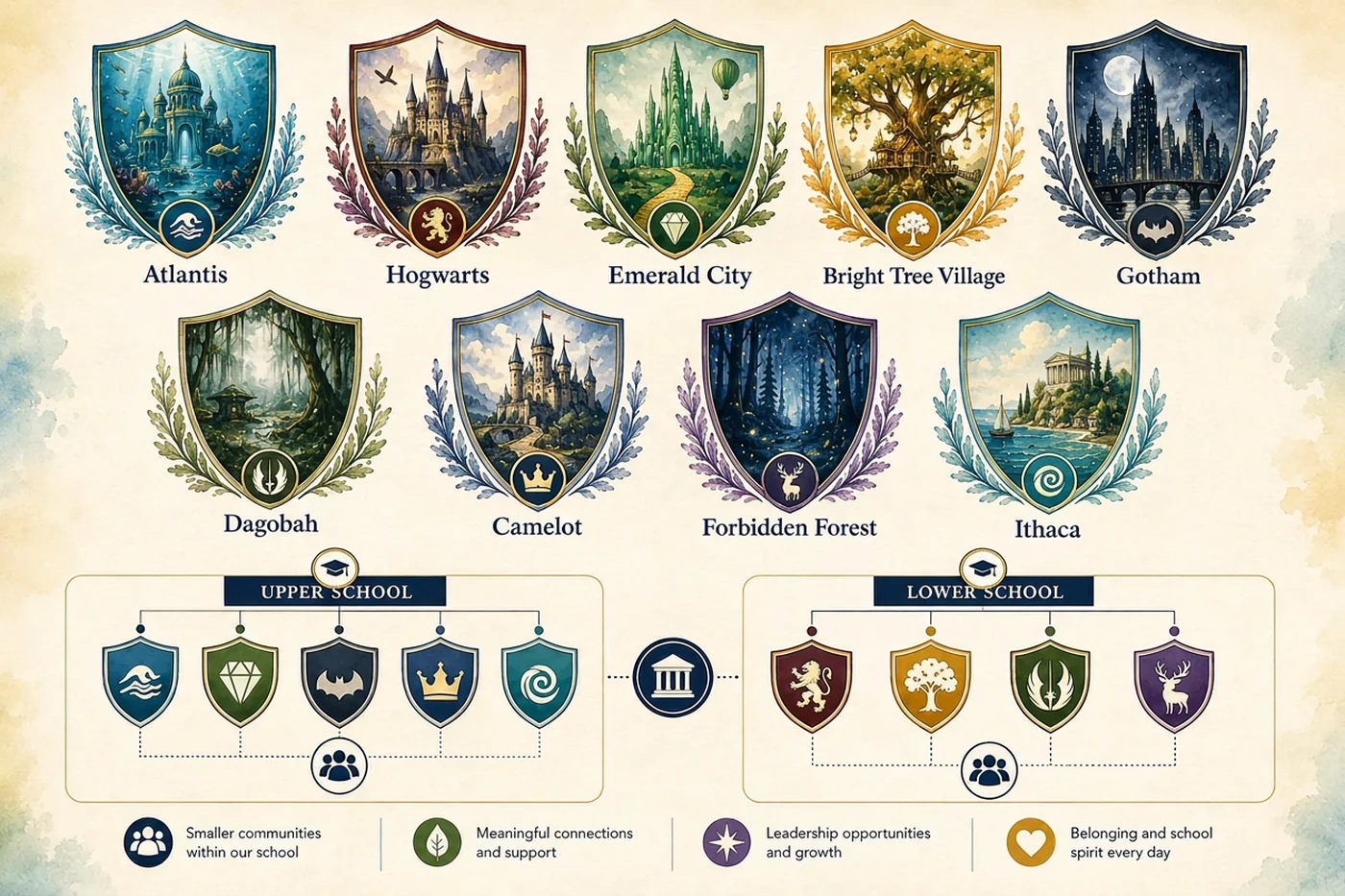
Overview of the Brilliant Microschools House system showing all nine House crests organized into Upper and Lower School groupings.

Houses keep a growing school feeling small.

As Brilliant Microschools grows, we organize students into smaller Houses: Atlantis, Hogwarts, Emerald City, Bright Tree Village, Gotham, Dagobah, Camelot, Forbidden Forest, and Ithaca.
The House system gives students a closer community inside the wider school. Houses hold assemblies, build their own identity, and create shared symbols and traditions.

This helps students feel part of something more personal, manageable, and familiar. They can belong to the wider school while also having a smaller group where names, faces, rituals, and relationships become easier to recognize.

Watercolor infographic showing four family communication channels: Toddle for teacher communication, text and email for parent support, WhatsApp for field trips and local meetups, and a Facebook group for the wider family community.

Clear family communication channels keep everyone connected.

Families should know where to go, who to contact, and how to stay connected.

Teachers communicate through Toddle. Parent Support is available by text and email. Field trips and local meetups are supported through WhatsApp groups. The wider parent community can connect through the Facebook group.

This gives families clear channels for classroom updates, practical support, local coordination, and broader community connection throughout the school year.

Community in practice

Real ways students meet, join in, and build confidence.

Students do not all join community in the same way.

Some begin with their small class. Others first join a themed meetup, a House assembly, a schoolwide event, or a local Zoom before attending a field trip.

For students who have experienced anxiety, bullying, school avoidance, or social overwhelm, this matters. They do not need to jump straight into a large social environment. They can reconnect through smaller, structured entry points.

That is how confidence rebuilds.

Themed online meetups.

Students can join lower-pressure online gatherings around shared interests.

Examples

Anime NightArt NightPet NightTrivia NightCreative WritingMusic MeetupArts & CraftsThe Chill Zone

A shared interest makes the first conversation easier.

Local and regional meetups.

Families can join location-based Zoom meetups before meeting in person.

Examples

Miami / Fort LauderdaleSan AntonioPhiladelphiaPhoenixOrlandoAlbuquerqueMaine, New Hampshire, and VermontDC / BaltimoreRaleigh / DurhamFresno

These meetups help parents and students discover who else is nearby. That makes local connection feel less random.

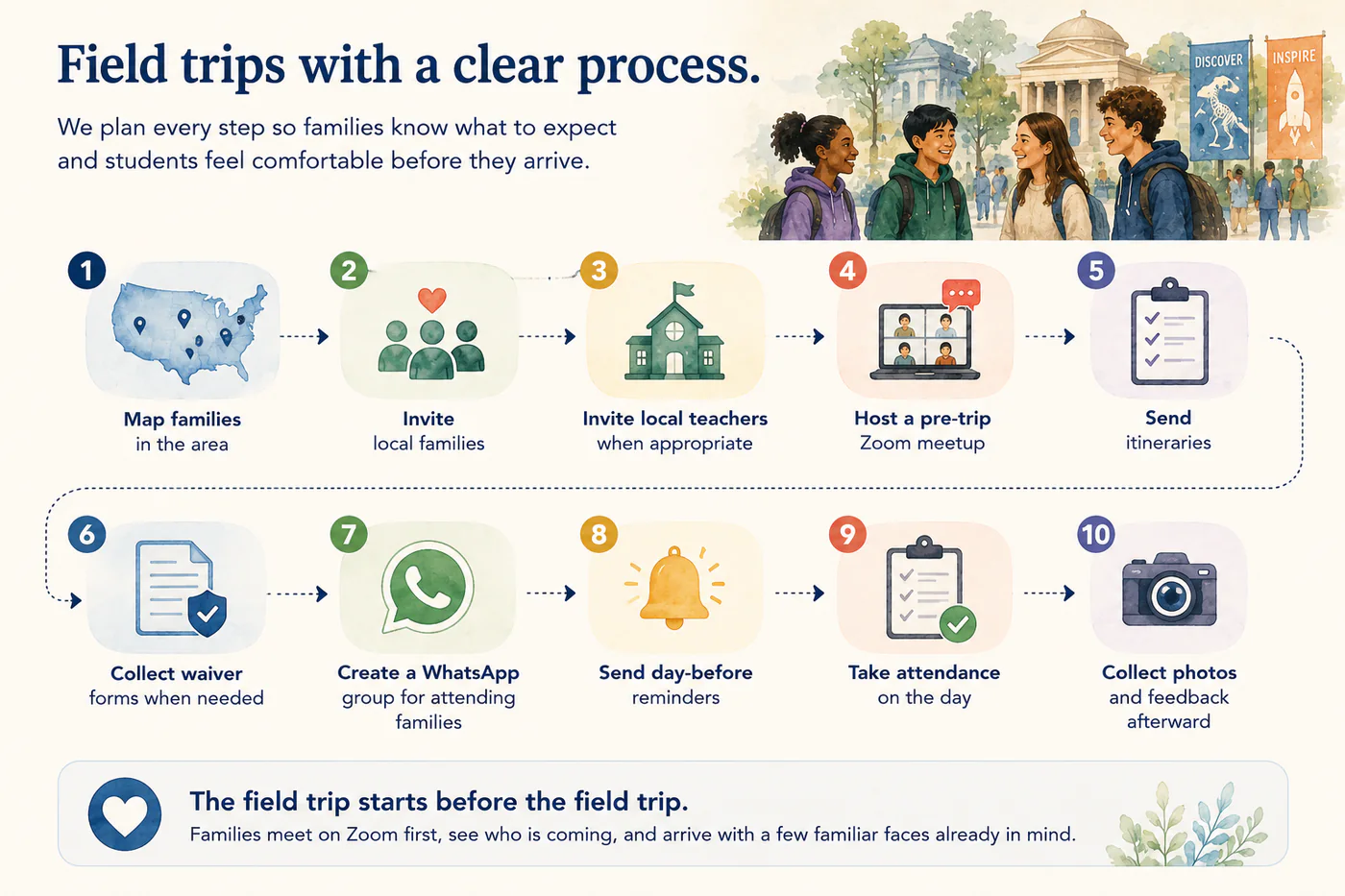
Field trips with a clear process.

Field trips are planned carefully so families know what to expect.

Process

Family mappingLocal invitationsPre-trip ZoomWaiversItineraryWhatsApp groupRemindersAttendancePhotos & feedback

The field trip starts before the field trip. Families meet on Zoom first, see who is coming, and arrive with a few familiar faces already in mind.

Infographic showing the planning process for Brilliant Microschools field trips, from mapping families to pre-trip Zooms, waivers, reminders, attendance, and feedback.

Student growth

Connection is part of student growth.

At Brilliant Microschools, engagement and connection are treated as part of the school experience.

Teachers and school leaders pay attention to participation, confidence, communication, and social-emotional growth alongside academic progress.

For some students, raising a hand in a small class is growth. Joining a House assembly is growth. Showing up to a themed meetup is growth. Attending a field trip after a difficult school experience is growth.

The goal is steady confidence.


A nationwide school community, one familiar face at a time.

Brilliant Microschools is online because online learning gives families flexibility, access, and the right academic fit.

But the human part still matters.

So we build community deliberately: through electives and clubs, schoolwide traditions, Thursday meetups, field trips, Houses, and clear family communication channels.

Students do not need connection to happen all at once. They need repeated, familiar ways to feel known.